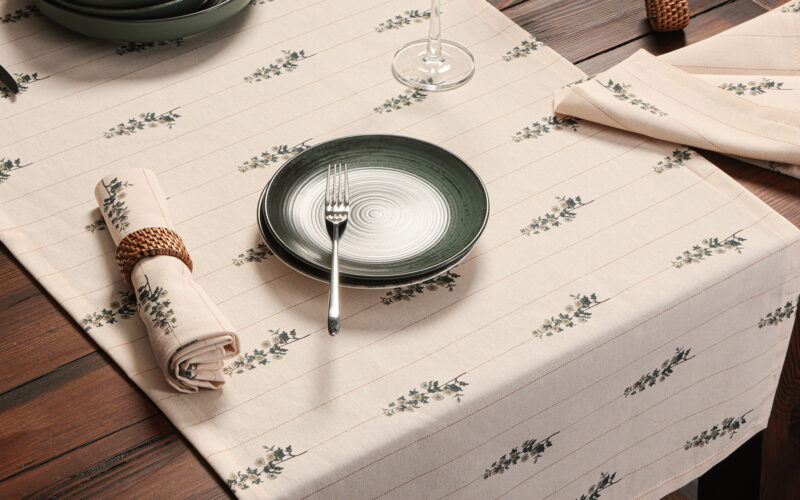
One of the most important details that completes a table setting is the choice of a runner. Placed over a stylish tablecloth, a runner protects the table and enhances the visual aesthetic of the dining area. However, measurements are as important as patterns and colors. A runner that is too short gets lost on the table. A runner that is too long becomes impractical and visually unbalanced. For this reason, factors such as table size, number of seats, table shape and intended use should all be considered before making a decision.
The Importance of Measuring Your Table Correctly
The first step in selecting a runner is determining the correct measurements of the table. Choosing a runner without proper measurements often leads to mismatched results. The length and width of the table should be noted and the ideal runner length calculated accordingly. Additional drop on each side should also be included.
A runner that fits the table size creates a harmonious and organized look. It aligns with the placement of plates, cutlery and accessories and supports both aesthetics and functionality. Porland’s runner collection offers a wide range of options suitable for various table types.
Standard Runner Sizes Based on Seating Capacity
The number of seats at the table is an essential factor when determining runner length. For small four seat tables, runners that measure 120 to 140 centimeters are ideal. For six seat tables, the range increases to 160 to 180 centimeters. For large eight seat tables, runners measuring 200 to 220 centimeters work well. These sizes may be increased for more crowded dining arrangements.
Runner width is typically around 40 centimeters. This dimension balances functionality with visual appeal. Choosing a runner length suited to the number of seats ensures a well balanced table surface.
How Much Drop Should a Runner Have?
The amount of drop at the ends of the runner is an important visual element. A short runner makes the table look smaller. A very long drop can cause discomfort during meals. The ideal drop range is 20 to 30 centimeters on each end.
For example, a table measuring 180 centimeters pairs well with a runner between 220 and 240 centimeters. When the drop is adjusted correctly, tableware and accessories appear harmonious with the runner.
Choosing a Runner According to Table Shape
Table shape directly influences runner size. Long runners suit rectangular tables and create a symmetrical look along the entire length. Oval tables require runners that gently drape over the edges without overwhelming the curved form. Round tables typically use shorter runners or two runners placed diagonally.
When the runner size complements the table’s shape, the runner settles naturally, maintains visual balance and highlights the table design.
Fabric Thickness and Length Compatibility
Fabric thickness should also guide the size selection. Thin fabrics create an elegant appearance even in longer lengths. Thick textured runners appear best in shorter lengths. Cotton, linen and satin each offer different visual and functional qualities.
A thick runner chosen in an overly long size may look bulky. When selected in a shorter length, the fabric harmonizes with the table and supports the overall design. Fabric structure and length compatibility directly shape the visual impact of the runner.
Large Tables: One Long Runner or Multiple Short Runners?
For wide and long tables, using multiple small runners can create a sophisticated alternative to a single long piece. Arranged in different directions along the table, these runners add a modern and structured look and are especially useful for large gatherings.
A single long runner provides unity, while multiple short runners divide the table into visual sections and create a dynamic atmosphere. Table size, event style and table accessories should guide the choice.
Choosing the Size Based on Purpose: Daily, Formal or Decorative Use
The purpose of use also influences runner size. Shorter and practical runners are ideal for daily dining because they make cleaning easier and provide comfortable use. For formal settings, long runners with elegant drops add sophistication.
For decorative use, the runner can be sized to create a striking central line on the table. When combined with matching tablecloths or dinnerware, decorative runners create a powerful visual effect.
Aesthetic and Visual Balance: Pattern, Color and Harmony
Patterns, colors and harmony are as important as the size itself. The runner should balance with the plates, glasses and accessories on the table. Intense patterns may look overwhelming on small tables. However, large tables support long and patterned runners with strong visual presence.
Color should match the tones of the table and table accessories. Dark tones create a refined and formal atmosphere. Light tones create an airy and fresh appearance. The harmony of size and pattern is one of the main factors shaping the overall dining ambiance.
Common Measurement Mistakes to Avoid
The most common mistake in choosing a runner is ignoring measurements. A runner that is too short or too long disrupts visual balance. Choosing a length that does not match the fabric thickness can also create an unbalanced appearance.
Using very wide runners on narrow tables or long runners on round tables does not produce the desired look. To avoid these mistakes, always consider the table’s size, shape and purpose.
Choosing the right runner size enhances both aesthetics and functionality. A properly sized runner highlights the arrangement of the table and brings harmony to the setting. Incorrect sizing reduces visual elegance.
You can explore Porland’s runner collection to discover various sizes and designs and find the perfect model for both daily use and special gatherings.