Chickpeas are one of the most popular legumes used in everyday cooking. With their rich fiber and protein content, chickpeas offer a nutritious and satisfying meal option. To achieve the ideal texture, the right cooking techniques must be applied. Using a pressure cooker shortens the cooking process and helps soften the chickpeas evenly. In this guide, you will find everything from preparation steps to key tips, common mistakes and serving suggestions.
What Should Be Done Before Cooking Chickpeas?
For a delicious result, the chickpeas must be properly prepared before cooking. Rinse the dried chickpeas thoroughly, then sift through the grains to remove any stones, cracked pieces or loose skins. Place them in a large bowl and cover with plenty of water. This step not only speeds up the cooking process but also helps the chickpeas soften evenly.
How Long Should Chickpeas Be Soaked?
To reach the preferred level of softness, chickpeas should be soaked for at least eight hours or ideally overnight. As they sit at room temperature, the chickpeas absorb water, swell and release some of the compounds that make digestion difficult. Extending the soaking time supports quicker and more even cooking while also helping to reduce gas-producing effects.
How Long Do Chickpeas Cook in a Pressure Cooker?
Soaked chickpeas typically cook to perfect softness in 20 to 25 minutes in a pressure cooker. If the soaking time was short, the cooking time may extend to 30 minutes. Start timing once the lid is sealed and steam begins to release from the valve. After the cooking time is complete, release the steam carefully.
If you want to learn how to use a pressure cooker safely and efficiently, you can visit our blog article titled “How to Use a Pressure Cooker Correctly”.
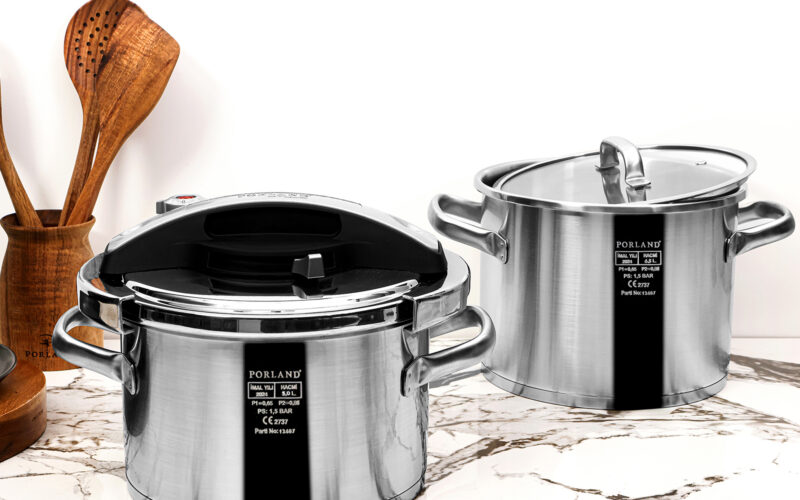
To save time while preparing delicious chickpea dishes, you can explore the Porland Valense pressure cooker set and the wider Porland cookware collection.
Tips for Softer and Faster-Cooking Chickpeas
A few simple methods can help chickpeas cook more quickly and evenly. Adding a teaspoon of baking soda to the soaking water softens the chickpeas faster. A small amount of cumin or bay leaves in the cooking water adds flavor and may help reduce gas formation. Using hot water in the pressure cooker also helps build pressure more quickly.
Common Mistakes When Cooking Chickpeas
One of the most common mistakes is trying to cook chickpeas without soaking them long enough. Chickpeas that are not fully hydrated may look soft on the outside but remain firm inside. Adding too much water to the pot can affect the final consistency of the dish. Opening the pressure cooker before the pressure has fully released is also risky. Overcooking will cause the chickpeas to split or lose their shape.
How to Prevent Chickpeas from Peeling in a Pressure Cooker
To avoid skins separating during cooking, the chickpeas should be fresh and properly soaked. Changing the soaking water once or twice helps prevent the outer skins from swelling excessively. High heat and excessive cooking time may cause peeling. Once the chickpeas are cooked, strain them gently without too much stirring so they keep their shape.
Ways to Use Cooked Chickpeas
Cooked chickpeas offer great versatility in the kitchen. They can be enjoyed in traditional chickpea stew, used in hummus, chickpea salad, oven-roasted chickpea snacks or added to meat casseroles. Boiled chickpeas are also ideal for enriching soups and increasing their nutritional value.
Porland Recommendation: Stylish Serving Pieces for Chickpea Dishes
Presentation is as important as flavor at the dining table. Adding a modern touch to traditional dishes helps create a memorable experience for your guests. Once your dish is ready, serving it in an elegant bowl enhances both the visual appeal and the overall dining atmosphere.
If you want to present classic meals like chickpeas with a refined touch, you can explore Porland’s serving bowls and dinnerware collections.